

































What Students Everywhere Are Eating and What They're Skipping

Food is universal. Broke is universal. And the specific way students navigate hunger, budgets, and the need to eat something that isn't completely miserable, that's where things get genuinely interesting.
Across five countries, the pressure is the same: more expensive groceries, less money to spend, and the daily puzzle of making it work. But what's on the plate, and what's been quietly cut from the shopping list, looks very different depending on where you are.
Here's the global student food reality check for 2026.
Nigeria: The Garri-to-Jollof Spectrum
Nigeria's food inflation was running at 26% year-on-year as recently as early 2025, and while it's technically falling from the peak, students on the ground aren't feeling much relief. A 50kg bag of rice now runs ₦110,000–₦120,000 in major markets. A single tuber of yam can cost ₦6,000–₦8,000. A basket of tomatoes has hit ₦18,000. And a plate of jollof rice with chicken at a mid-range restaurant? ₦8,000–₦10,000.
For students, this has hardened a clear hierarchy of foods: what you eat when money is there, what you eat when it's tight, and what you eat when it's genuinely gone.
At the top: jollof rice, fried rice, Yam and egg, beans and plantain, the aspirational daily meals.
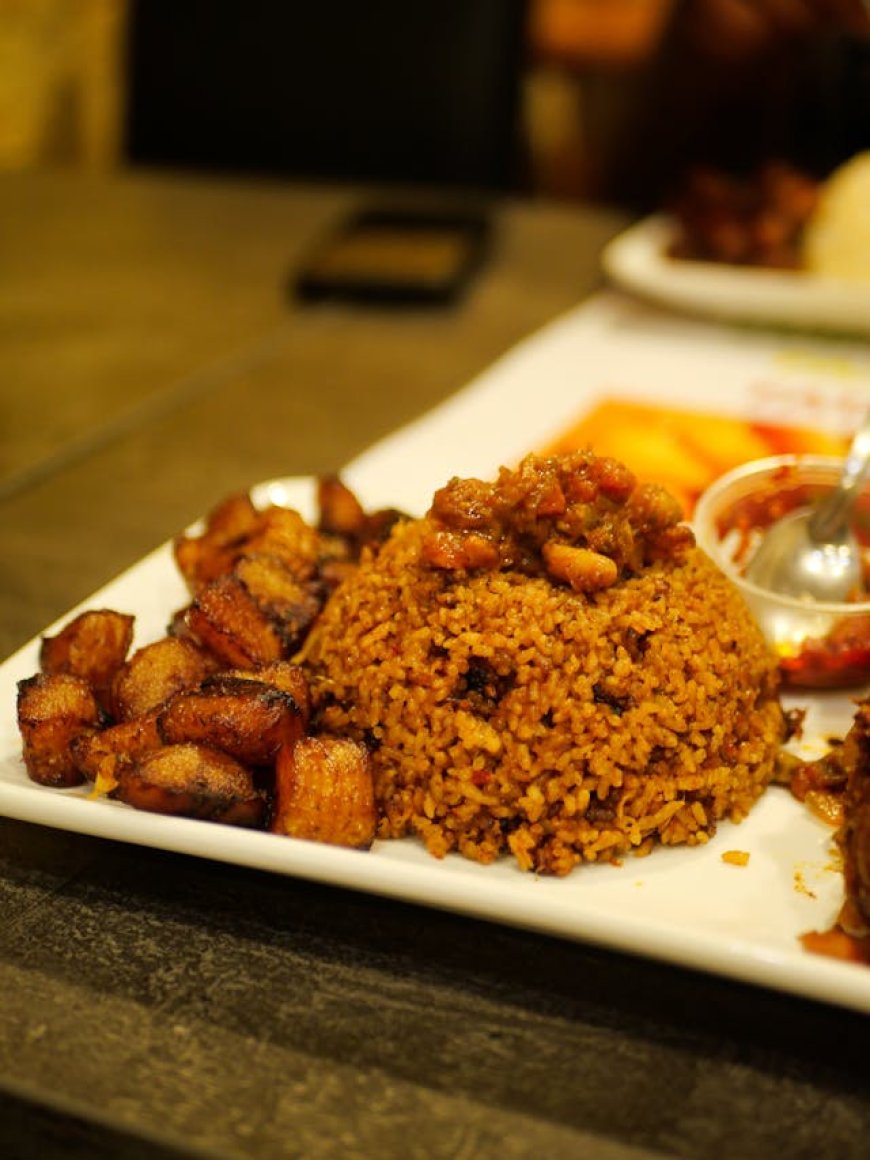
In the middle: spaghetti jollof (a pot costs around ₦3,500 and feeds multiple people), rice and stew made from a shared pot, and noodles upgraded with an egg and vegetables.
At the bottom, but never shameful, is garri. Drinking garri with water, sugar, groundnuts, and milk powder is the Nigerian student safety net. Cheap, filling, fast, and nutritionally functional if you add the right extras.
The TikTok food content coming from Nigerian university students right now is a masterclass in this spectrum. The "what I eat in a day as a broke Nigerian student" genre is enormous, earnest, often funny, and it's driving a real conversation about food shame, inflation, and the gap between the lifestyle students are supposed to be having and what they can actually afford.
What students are skipping: restaurant meals (even mid-range ones have become a genuine treat, not a default), imported food brands, and anything that doesn't offer high volume for the price. Protein has also taken a hit; meat is increasingly being replaced by stockfish, dried fish, eggs, and beans as the dominant protein sources. The 50% bulk-staples, 30% weekly fresh, 20% flex budget framework is the one most commonly recommended, and many students are sticking to it out of necessity.
UK: Yellow Stickers and the Aldi Effect
Among UK adults who expect their finances to worsen in 2026, nearly two-thirds say they will cut back on eating and drinking out. For students who are almost always in the "finances worsening" camp, this isn't a future intention. It's the current reality.
The UK student food landscape in 2026 has been shaped by two years of above-inflation food price increases. In early 2025, the rate at which food prices increased surpassed the general rate of inflation, creating a specific challenge for households managing their food budgets. Healthier foods have been disproportionately affected; the price of healthier food options is rising at a faster rate than that of less healthy, often more processed, alternatives, with healthier foods costing nearly three to four times as much per calorie compared to less healthy options. That's not a statistic students feel in the abstract; it's the reason so many end up buying the value pasta and cheap bread rather than the vegetables and protein they actually want.
The result is a distinctive set of UK student food behaviours. Aldi and Lidl have become the default for student grocery shopping; their own-brand products consistently undercut major supermarkets by a significant margin, and the quality gap has narrowed to near-irrelevance for cooking basics. "Yellow sticker shopping", hunting for items reduced near their sell-by date, has gone from a tip to a genuine strategy, with students timing trips to specific supermarkets when markdowns happen.
Pasta and rice remain the backbone. Jacket potatoes are having a comeback as one of the cheapest and most filling home meals available. Foodservice delivery now accounts for around 10.9% of the UK eating out market, and it is exactly what students who are serious about their budgets are cutting first. A £4 delivery fee plus surge pricing can add 40–50% to the cost of a meal you could have made yourself for £2.
What students are skipping: Deliveroo and Uber Eats as a regular habit, branded goods, "grab and go" food from campus shops at £4–£6 a time, and meal deals that don't include a hot drink. The coffee shop habit has also taken a hit; the £4–£5 daily coffee has been replaced by instant coffee and campus hot water dispensers for a meaningful portion of students.
Canada: One in Four Is Food Insecure
Canada's food story in 2026 is harder to tell as a lifestyle piece because it keeps running into a harder truth. One in four Canadian households is now food insecure; food insecurity is no longer a marginal condition experienced quietly at the edges of society. It has become a mainstream reality, cutting across regions, age groups, and employment status. For students who have limited income, high rent, and international tuition fees, the proportion is likely higher still.
Projections for 2026 suggest grocery prices will rise another 4 to 6 per cent this year, adding roughly $1,000 more to the annual food bill for a typical family of four, on top of years of compounding increases already absorbed. For a student managing on their own, those numbers are proportionally devastating.
In practical terms, what Canadian students are eating comes down to two strategies: batch cooking and relying on carbohydrate staples. Rice, pasta, and lentils are the backbone. Eggs are the most cost-effective protein and appear in every budget-conscious student's weekly rotation. Frozen vegetables outperform fresh on both cost and shelf life, and the nutritional argument for frozen vegetables is actually stronger than people realise. Canned beans, canned tomatoes, and dried lentils form the foundation of the most functional student meal prep.
Ramen and instant noodles are still staples, but they've evolved. The bare-packet approach has given way to the "upgraded ramen" trend: a pack of Shin Ramyeon or Samyang elevated with an egg, frozen spinach, garlic, and whatever protein is cheapest. The Korean ramen influence is particularly strong in Canadian university cities with large Asian student populations, and the gap between "student ramen" and "real meal" has narrowed considerably.
What students are skipping: campus meal plans that don't offer value, organic and premium grocery items, restaurant eating outside of specific social occasions, and food delivery apps, except as an occasional treat. Campus food banks, which most students don't know exist until they need them, have seen a significant increase in usage and deserve more visibility than they get.
Spain: The Menú del Día Is Student Infrastructure
Spain has a secret weapon that students from other countries genuinely don't anticipate: the menú del día. This is a set lunch offered by most traditional restaurants, a starter, a main, bread, a drink, and often a dessert, for a fixed price typically between €10 and €14. It is one of the best-value hot meals available in any country in Europe. For students, knowing which local restaurants near campus do a good menú del día is genuinely one of the most valuable pieces of information you can acquire in your first week.
Students in Spain typically spend between €150 and €300 per month on food in 2026, depending on how often they cook, eat out, and where they shop. Spain's grocery prices are 18–25% lower than in France, Germany, or the Netherlands. Mercadona is the dominant student supermarket, its own-brand products are consistently good quality at low prices, and the chain's hacendado range has become a cultural touchstone for budget cooking in Spain.
The staples for Spanish student cooking: olive oil (cheaper here than anywhere else in Europe), tomatoes, onions, garlic, canned tuna, eggs, pasta, rice, lentils, and chickpeas. The Mediterranean diet isn't just a wellness concept; in Spain, it's also a budget-friendly one. Legumes, vegetables, and olive oil form a genuinely nutritious and inexpensive cooking foundation. Students who learn to make tortilla española, lentil stew, and a basic sofrito can eat well for very little.
What students are skipping: the premium supermarkets (El Corte Inglés food hall pricing is not for student budgets), imported food products from home countries (which carry significant markups), and the café con leche and pastry habit that adds up quickly if done daily.
South Korea: Ramen Nation, Campus Canteen Culture, and the 4,000 Won Meal
South Korea occupies a unique position in global student food culture: it is simultaneously the spiritual home of instant ramen and a country where university campus canteens offer some of the best-value hot meals available anywhere in the world.
Ramen is widely accepted among college students who live a busy lifestyle and want pocket-friendly meals. The ppalli ppalli (fast-paced) culture drives demand for convenient, affordable food that fits into packed schedules. Korean ramyeon is not the same product as Western instant noodles. Shin Ramyeon, Buldak, and Neoguri have genuine flavour depth, and the Korean student ritual of upgrading a pack with an egg, cheese, rice cakes, or vegetables is an art form in itself. South Korea's Samyang fire noodles went viral worldwide, proving how domestic brands can transform global taste trends.
But the campus canteen, the student cafeteria, is where the real budget magic happens. University cafeterias in Korea typically serve full hot meals: rice, soup, two or three side dishes (banchan), and a protein, for around 4,000–6,000 KRW, roughly USD 3–4. This is genuine food, not the sad cafeteria offerings of UK or North American universities. It's the same style of meal a Korean family would eat at home, made in volume, and priced specifically for students. Students who use the campus canteen daily are eating properly for a fraction of what they'd spend cooking or eating out.
What Korean students are skipping: convenience store meals as a primary food source (GS25, CU, and 7-Eleven are everywhere and tempting, but eating convenience store kimbap and triangle rice balls three times a day adds up), delivery apps as a default, and restaurant eating outside of specific social meals. The delivery app culture is strong in Korea; Baemin and Coupang Eats are genuinely popular, but students who've done the maths know that even a modest delivery order typically costs three times the campus canteen equivalent.
The Universal Things Students Are Cutting Everywhere
Across Nigeria, the UK, Canada, Spain, and South Korea, there are a handful of food behaviours that appear on almost every student's cut list in 2026:
Food delivery apps: the convenience premium is the first thing to go when budgets tighten. The markup between making something at home and having it delivered is too significant to justify regularly.
Branded products: own-brand and value-range alternatives have closed the quality gap enough that most students aren't noticing a difference, especially for cooking basics.
Eating out as a default: restaurants and cafes remain part of student social life, but they've shifted firmly into the "occasion" category rather than the everyday one.
Wasted food: the shift toward batch cooking, cooperative buying, and intentional meal planning means students are losing less to spoilage. Not out of principle, but out of the financial reality that throwing food away is the same as throwing money away.
The One Thing That Hasn't Changed
What students eat on a budget is shaped by their country, their culture, and the specific economic pressures of 2026. But the underlying dynamic is the same everywhere: the food that forms the foundation of student life is the food that offers maximum energy, minimum cost, and enough familiarity to actually eat when you're tired and stressed.
Garri. Pasta. Rice. Ramen. Lentils. Eggs. The specific version differs. The logic is identical.
What's Your Reaction?
 Like
0
Like
0
 Dislike
0
Dislike
0
 Love
0
Love
0
 Funny
0
Funny
0
 Angry
0
Angry
0
 Sad
0
Sad
0
 Wow
0
Wow
0