

Can an International Student Buy a Property in the UK?
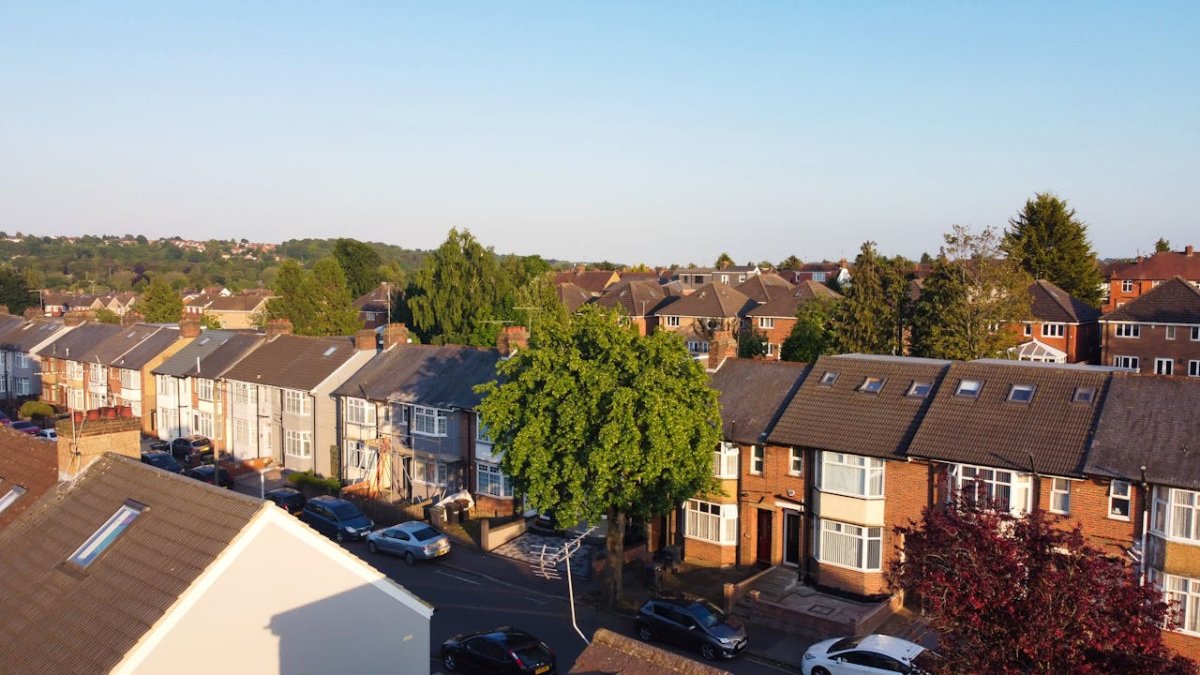
The question of buying a property in the UK as an international student is always at the centre of discussion in group chats and all. Renting as a student is expensive, and more than half of your income is spent on rent. You can use our budget calculator to have an idea of your monthly spending. If your room or flat costs £900 per month, you will likely spend £10800 a year. So the question becomes:
"Would it not make more sense to just buy?"
It is a question more international students and their families are taking seriously, not just in London, but in Manchester, Edinburgh, Birmingham, and other major university cities. And the short answer is: yes, it is legally possible. But the longer answer involves stamp duty surcharges, mortgage restrictions, visa considerations, and a tax landscape that changed meaningfully in 2025. This article explains all of it.
Is It Legal for an International Student to Buy Property in the UK?
Yes, entirely. There are no legal restrictions on foreign nationals purchasing property in the United Kingdom, regardless of nationality, visa status, or immigration situation.
Anyone of any nationality and any immigration status can buy and own property in the UK. This includes international students on a Student visa (formerly known as Tier 4). You do not need to be a UK citizen, a permanent resident, or even to have been in the country for a minimum period. The right to purchase property is unconditional.
What property ownership does not give you is any immigration benefit. Buying a house in the UK does not automatically grant residency or immigration rights. Property ownership and residency status are governed by entirely separate legal frameworks. Owning a flat in Manchester does not help your visa application in any way, and there is no property investment route to UK residency.
The practical question, whether buying makes financial and logistical sense, is separate from whether it is permitted. Both are addressed below.
Why Families Consider It
The calculation varies by city and family circumstance, but the core logic tends to go like this:
A student spending three to five years in the UK, paying rent, generates no return on that expenditure. Rent in major UK university cities has risen substantially; a decent one-bedroom flat in Zone 2 London runs £1,800–£2,400 per month; in Manchester's city centre, £1,200–£1,800. Over a four-year degree, that is £57,000–£96,000 in London, or £48,000–£72,000 in Manchester, spent on accommodation alone.
Against that backdrop, a property purchase starts to look less like an extravagance and more like a reallocation of money that would have been spent anyway, one that builds equity rather than disappearing entirely.
Many wealthy international students choose to rent or buy property instead of living in university halls or student housing for greater comfort, privacy, and long-term value. Parents of student buyers often see the purchase as a way to support their child while investing in London real estate.
There is also the rental income angle. If a student buys a two or three-bedroom property and rents the spare rooms to other students, the rental income can offset the mortgage, effectively having other people's rent contribute to the purchase of an asset. This requires compliance with buy-to-let rules and tax obligations, covered below.
The Visa Question: What International Students Need to Know
While buying property is legal on any visa, there is one specific restriction that international students on a Student visa need to understand before purchasing with the intention of generating income.
If you rent out your property, you must pay income tax on the income you receive from rent. Furthermore, renting out a property or buying a property as an investment could be seen as a business activity. Student visas prohibit self-employment and running a business. If renting out rooms is deemed a business activity by the Home Office, it could create a visa compliance issue.
The safe path, if you want to rent rooms to other students, is to take professional immigration advice before doing so. The risk is not zero, and the consequences of a visa breach are significant. Owning a property and living in it is clearly fine. Renting it out intensively as an investment is in greyer territory.
Stamp Duty: The Extra Cost That Catches People Off Guard
This is where the financial picture for international students diverges meaningfully from that of domestic buyers.
Stamp Duty Land Tax (SDLT) is a tax paid when purchasing property in England and Northern Ireland. Scotland has its own Land and Buildings Transaction Tax (LBTT), and Wales has the Land Transaction Tax (LTT), each with different rates. All figures below refer to England and Northern Ireland.
Since 1 April 2025, the standard residential SDLT rates are:
|
Property price band |
Standard rate |
|
Up to £125,000 |
0% |
|
£125,001 – £250,000 |
2% |
|
£250,001 – £925,000 |
5% |
|
£925,001 – £1,500,000 |
10% |
|
Above £1,500,000 |
12% |
These are progressive rates; you pay each rate only on the slice of the price that falls within that band, not on the whole purchase price.
The Non-Resident Surcharge
From 1 April 2021, different rates of Stamp Duty Land Tax apply to purchasers of residential property in England and Northern Ireland who are not resident in the UK. The rates are 2 percentage points higher than those that apply to purchases made by UK residents.
For SDLT purposes, you are considered a UK resident if you have spent at least 183 days in the UK in the 12 months before your purchase date. Many international students, particularly in their second or third year of studies, will meet this test and therefore avoid the surcharge. A student who arrived in September and buys property the following October, having spent roughly 13 months in the UK, is likely to qualify as a UK resident under this test.
If you do not meet the 183-day threshold at the time of purchase, individuals who pay the non-resident surcharge on the purchase of a property can claim a refund of the surcharge if they spend 183 days or more in the UK in any continuous period of 365 days beginning 12 months before and ending 12 months after the effective date of the transaction.
In plain terms, if you buy in your first months in the UK and pay the surcharge, you may be able to claim it back once you have accumulated enough time here.
The Additional Dwellings Surcharge
If the student already owns a residential property elsewhere in the world, or if the parents own other properties and are co-purchasing, an additional 5% surcharge applies on top of all other rates. This was raised from 3% to 5% in October 2024.
If you're a non-UK buyer purchasing a second home or buy-to-let, then both surcharges apply: the standard stamp duty rate plus 5% for an additional property and another 2% for non-UK residency, making a total of 7% extra on top of the standard rates.
A Real Example
A first-time buyer, UK resident, purchasing a £400,000 property in England:
- 0% on first £125,000 = £0
- 2% on £125,001–£250,000 = £2,500
- 5% on £250,001–£400,000 = £7,500
- Total SDLT: £10,000
The same purchase by a non-UK resident (add 2% to all bands):
- Total SDLT: £18,000 (an additional £8,000)
The same purchase by a non-UK resident who already owns a property elsewhere (add 7% to all bands):
- Total SDLT: £38,000
The surcharges can add up to a very significant sum, particularly on London prices. This needs to be factored into the upfront cost calculation well before purchase.
Mortgages on a Student Visa: What's Actually Possible
This is the area where most information online is either vague or outdated. The reality is nuanced.
Can you get a mortgage on a UK Student visa?
Yes, but it is harder than for other visa types, and the market is genuinely limited.
If you have a student visa or a very short-term visa, it will be much harder to secure standard mortgage deals. Some lenders may refuse entirely without very strong supporting finances.
The mainstream high-street banks, Halifax, NatWest, Nationwide, Santander, largely do not offer mortgages to student visa holders as a matter of policy. Specialist lenders and niche mortgage brokers do exist who operate in this space, but you will not find them by walking into a branch.
Deposit requirements
Deposit requirements vary widely, 5% is possible, 25% is common, and some lenders won't lend at all. Income level and UK residency length are the two biggest factors affecting the minimum deposit.
For a student visa specifically, the 25% deposit threshold is the most realistic starting point when approaching specialist lenders. Some will require 30–35% in the absence of strong income evidence or UK credit history.
The income problem
Most mortgages are calculated as a multiple of income, typically 4 to 4.5 times annual income. International students on a Student visa are permitted to work a maximum of 20 hours per week during term time. At the UK National Living Wage (£12.21 per hour from April 2025), that generates approximately £12,700 per year in term-time earnings, scaling to perhaps £18,000 including vacation work. A 4x multiple gives a maximum borrowing of around £72,000, which does not go far in most UK cities.
In practice, the majority of student property purchases are financed primarily by parents or family funds rather than mortgages taken by the student themselves. The purchase may be made in the parents' names, in the student's name alone with family funds providing the deposit, or as a joint purchase. Each structure has different tax and mortgage implications.
Gifted deposits
Foreign National Mortgage Lenders will accept "gifts" from people strongly connected to you, parents, siblings, uncles, aunts and even good friends. The gift would need to be non-repayable, and the donor cannot have a financial interest in the property. Deposits originating overseas are generally acceptable, provided the source of funds can be clearly documented, such as bank statements, sale proceeds of land or property, inheritance documentation, and so on. Anti-money laundering rules require lenders to trace the origin of large deposits.
Using a guarantor
A guarantor will take responsibility if something happens and the student can no longer afford to repay the loan. The tricky part is that your chosen guarantor will be assessed as if they are applying for the mortgage themselves, and they must already own property in the UK. A UK-based family member or friend who is a homeowner can potentially act as a guarantor, improving the student's chances of mortgage approval.
Buying Without a Mortgage: Cash Purchases
It's not difficult to buy property in the UK if you're paying cash. There aren't many regulations that would prevent you from buying a home in Britain outright.
Cash purchases sidestep the mortgage question entirely. The process involves appointing a conveyancing solicitor, conducting property searches, exchanging contracts, and completing the purchase. No lender approval, no credit checks, no income requirements. The solicitor will conduct anti-money laundering checks on the source of funds as a legal requirement, but this is a documentation exercise rather than a barrier.
For families with the financial means, a cash purchase in the student's name (or the parents' names) is genuinely straightforward. The costs are solicitor's fees (typically £1,500–£3,000 for a standard residential purchase), survey costs (£400–£1,500 depending on type), and stamp duty as calculated above.
Tax: What Happens After You Buy
Rental income tax
If you rent out rooms or the entire property while you own it, rental income is taxable in the UK. Non-UK residents pay income tax on UK rental income. You will need to register for self-assessment with HMRC and file an annual tax return. Allowable deductions include mortgage interest (partially), maintenance costs, letting agent fees, and insurance.
Capital Gains Tax on sale
When you sell a UK property, you may be liable for Capital Gains Tax (CGT) on the profit. UK residents pay 18% (basic rate taxpayer) or 24% (higher rate taxpayer) on residential property gains. Non-UK residents are also subject to CGT on the sale of UK residential property. You must report and pay within 60 days of completion of the sale.
Inheritance Tax considerations
From April 2025, the UK government changed the rules on non-domiciled individuals and UK property. Property held in offshore structures (trusts or companies) previously used to shelter UK property from UK Inheritance Tax is now within scope for UK IHT purposes. For families purchasing high-value UK property as an investment, this requires specific legal and tax advice.
The Letting-to-Students Option: Practical Considerations
If the plan is for the student to live in one bedroom and rent others to fellow students, there are practical matters beyond the visa question above.
A property shared by three or more unrelated individuals on separate tenancies is likely to be classified as a House in Multiple Occupation (HMO). HMOs require a licence from the local council in most areas, and councils impose standards on room sizes, fire safety, and amenity provision. Non-compliance is a criminal offence.
The student-as-landlord situation also requires understanding landlord obligations: tenancy deposits must be held in a government-approved scheme, and tenants have legal rights under the Renters' Rights Act 2025, which came into force in mid-2025. The Renters' Rights Bill introduces several important changes, including the abolition of Section 21 "no-fault" evictions, so landlords must now provide a valid reason to terminate a tenancy.
None of this makes the arrangement impossible, but it is not passive. Being a landlord while also studying full-time is a meaningful time commitment.
Is It Worth It? An Honest Assessment
The financial case is strongest when:
- The student will be in the UK for four or more years (master's followed by a working visa, for example)
- The family can purchase without a mortgage, or with a mortgage where they are the primary applicant
- The property is in a city with relatively stable or rising property values
- The student does not need to rent out rooms (keeping the visa position clean)
- The stamp duty surcharge is manageable relative to the overall purchase price
The financial case weakens when:
- The course is two years or less, a short hold period means transaction costs (stamp duty, solicitor fees, estate agent on sale) may not be recovered
- The property requires a mortgage on a student visa; the limited lender pool and high deposit requirements may make this prohibitive
- The plan depends on rental income, which creates both visa risk and landlord obligations
The most common successful scenario is: parents purchase the property (cash or mortgage in their names), the student lives in it, the property is sold, or the student continues living there after transitioning to a Graduate or Skilled Worker visa post-graduation.
Practical Checklist Before You Proceed
- Clarify whether you will be a UK resident for SDLT purposes (183 days in preceding 12 months), as this affects whether the 2% surcharge applies
- Establish whether you or your parents already own property anywhere in the world; the 5% additional dwellings surcharge may apply
- Get a stamp duty calculation done on the specific property before committing to a price
- If a mortgage is involved, consult a specialist broker who works with foreign nationals, not a high street branch
- If the plan involves renting rooms, take immigration advice before proceeding
- Instruct a conveyancing solicitor with experience in non-UK buyer transactions
- Prepare documentation for the source of deposit funds (anti-money laundering requirement)
- Consider the exit plan, selling before you leave, or letting after departure, and understand the tax implications of each
At a Glance: Key Facts for International Students
|
Question |
Answer |
|
Can a non-UK national buy property in the UK? |
Yes, no legal restrictions |
|
Does buying property grant residency rights? |
No |
|
Can a student visa holder buy property? |
Yes |
|
Can they rent it out? |
Possible, but visa and tax implications apply — get advice |
|
Is a mortgage available on a student visa? |
Limited lenders; 25%+ deposit typically required |
|
Non-resident SDLT surcharge |
+2% if under 183 days in UK in preceding year |
|
Additional dwellings surcharge |
+5% if buyer already owns property elsewhere |
|
Is a cash purchase straightforward? |
Yes, subject to AML checks on source of funds |
|
Where does SDLT not apply? |
Scotland (LBTT) and Wales (LTT) have separate systems |
The answer to the original question: Can an international student buy property in the UK?, is yes, cleanly and unambiguously. The more useful question is whether it makes sense for your specific situation, which depends on duration, finances, visa plans after graduation, and how much you want to take on as a student.
For families with the means and a four-year-plus time horizon, the numbers can genuinely work. For a one-year master's student without significant family financial support, it almost certainly doesn't. Most situations fall somewhere between those two points, which is exactly where good legal and financial advice earns its cost.

Instuly is the go-to website to discover side hustle ideas, tech and marketing skills, and ways to earn money as a student.