
How to Write a Scholarship Motivation Letter That Gets Read

A scholarship motivation letter is often the only document in your entire application where you speak directly to the committee. Your grades, transcripts, and certificates describe what you have done. The motivation letter explains who you are, why you're applying, and what you intend to do with the opportunity. Written well, it becomes the most persuasive part of your file.
What committees actually look for
Most students approach this letter with unnecessary fear, as if they must impress with dramatic stories or flawless English. In reality, scholarship panels look for something far simpler: clarity, sincerity, and direction. They want to understand your academic path, the moment you chose your field, the future you are working toward, and why financial support would make a genuine difference.
How to structure your letter
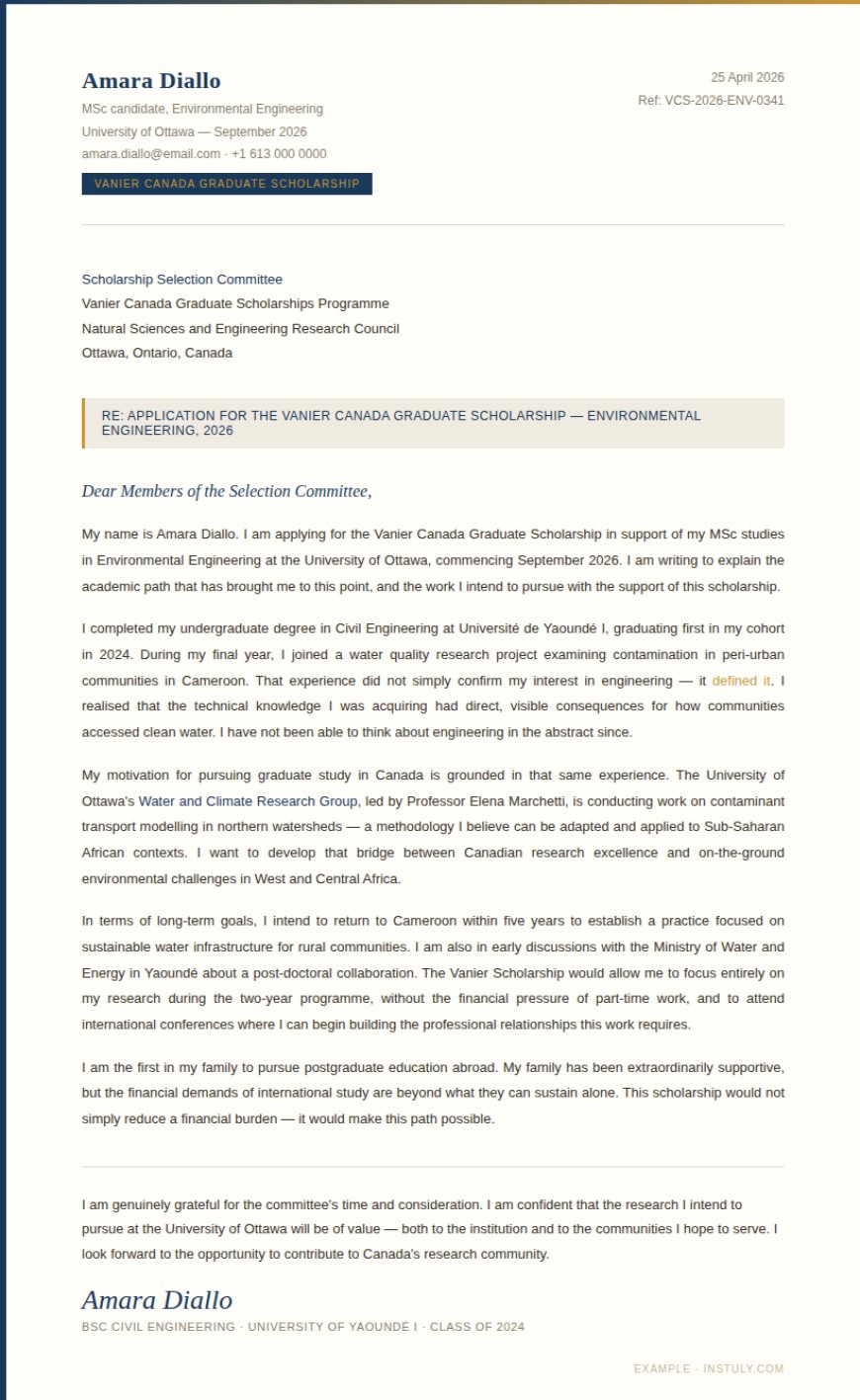
Opening calm and confident: You do not need a dramatic hook or poetic introduction. A clear opening that states your name, your intended programme, and the scholarship you are applying for is enough. What matters is tone: respectful, direct, and mature.
Academic background, choose the thread, not the list: This is not the place to rewrite your CV. Instead, pick the specific experiences that shaped your interest in your field. A research project that changed how you see a problem. A teacher who pushed you. A personal challenge that revealed a passion. The committee wants to see the connection between your past and your future, not a chronological list of achievements.
Your motivation: This is the heart of the letter. The best motivation letters are specific. Instead of "I love engineering," describe the moment you realised you wanted to solve a particular kind of problem. Instead of "I want to help my community," name the issue you want to address and explain why it matters to you personally. Vague statements are forgotten. Specific ones stay with the reader.
Long-term goals show direction, not a perfect plan: A scholarship is an investment. The committee wants to understand what you plan to do with the knowledge you gain. You do not need a rigid five-year plan, but you should show direction, the kind of work you want to do, the impact you hope to make, and how you intend to contribute beyond your own career.
Financial needs: If financial need is part of the evaluation criteria, address it with dignity. A simple, honest explanation of why funding is necessary and how it would enable your studies is enough. Committees respect honesty. They are not moved by emotional pressure.
Why this institution or programme: This is where research matters. Mentioning a specific course, professor, research area, or opportunity at that institution shows genuine intention. It tells the committee you are not applying at random; you have a reason for choosing them specifically.
Closing: End with confidence. Reaffirm your motivation briefly, thank the committee for their time, and close. You do not need to beg for the scholarship. A composed, grateful closing leaves a better impression than an anxious one.
A few things to avoid
- Clichés like "since childhood I have dreamed of..." or "it is my passion to change the world"
- Copying templates you found online, committees read hundreds of letters and recognise them immediately
- Going beyond one page unless the guidelines specifically permit it
- Starting every paragraph with "I"
Length and format
A strong motivation letter is typically 400 to 600 words, rarely more. It is not long. It is not dramatic. It is a clear, sincere narrative that connects your past, your present, and your future. Structure matters as much as content. If a committee member can read your letter in three minutes and understand exactly who you are and what you want, you have done your job.
You will find a full example below, written for a real scholarship scenario, which you can use as a reference.
What's Your Reaction?
 Like
0
Like
0
 Dislike
0
Dislike
0
 Love
0
Love
0
 Funny
0
Funny
0
 Wow
0
Wow
0
 Sad
0
Sad
0
 Angry
0
Angry
0

Instuly is the go-to website to discover side hustle ideas, tech and marketing skills, and ways to earn money as a student.